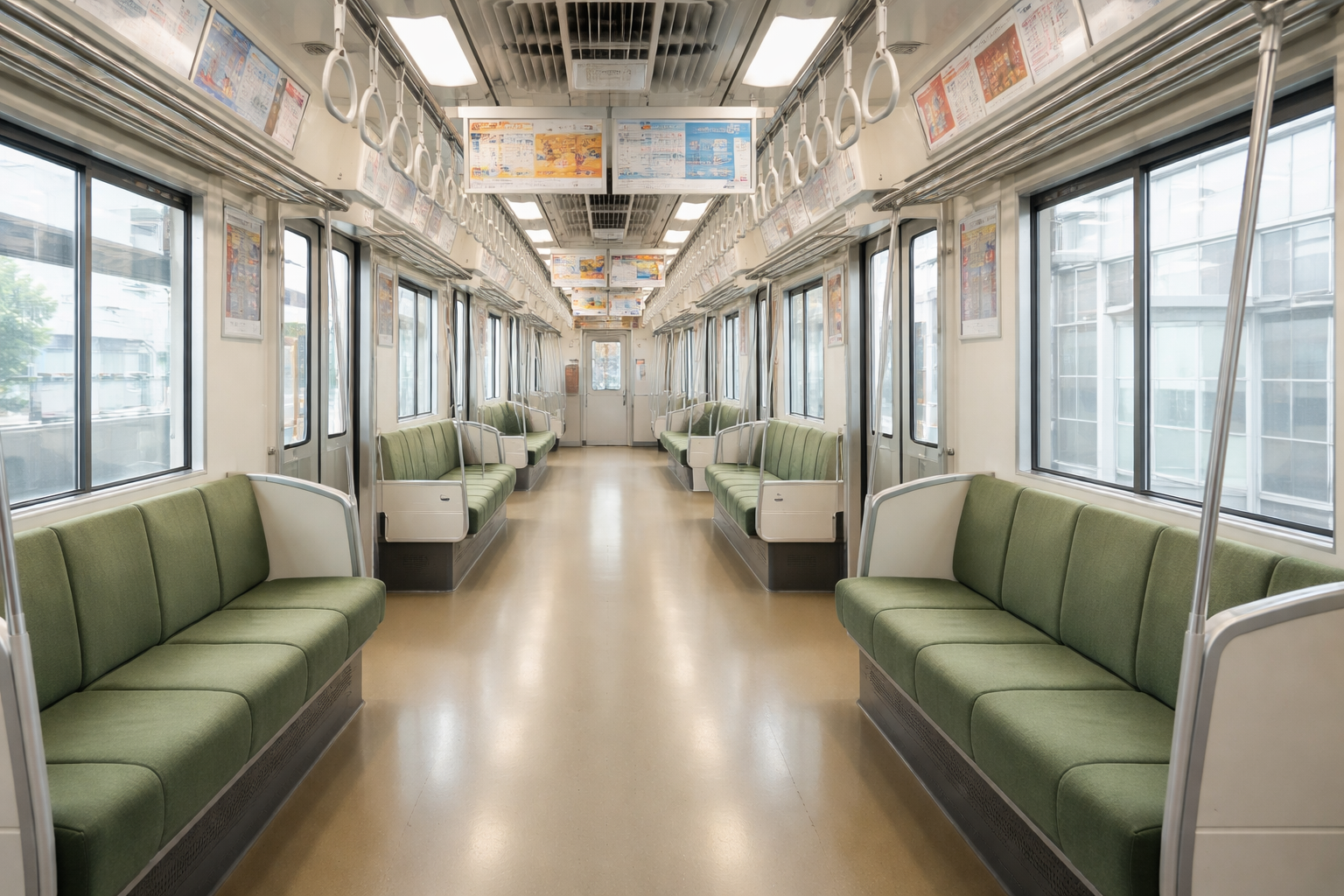
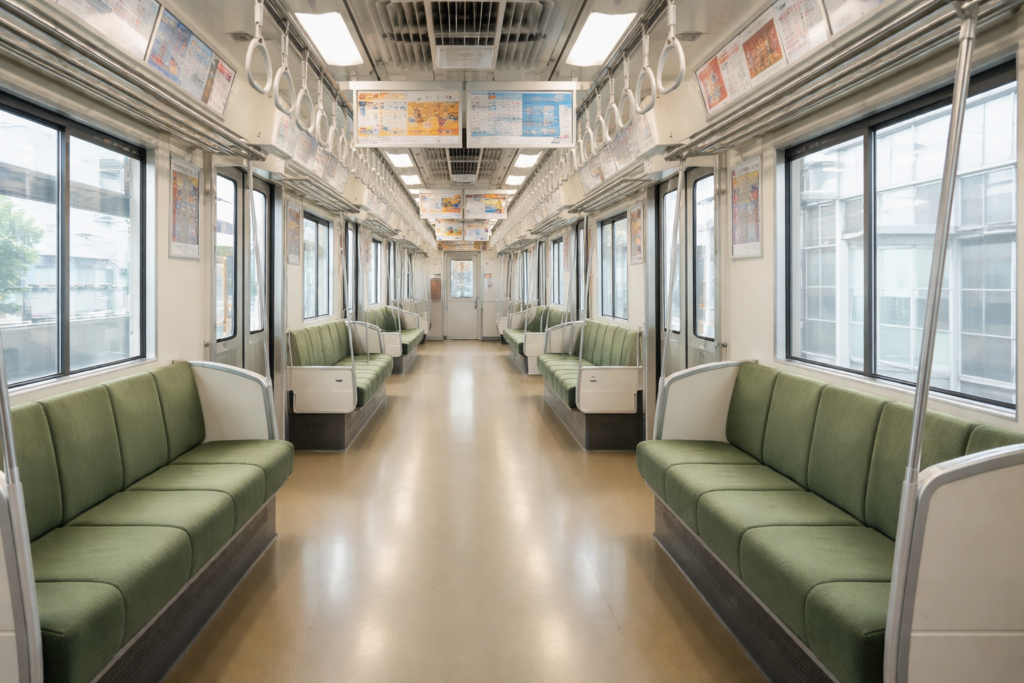
For many visitors, Japan’s public transportation feels unusually calm, quiet, and well-organized. What often goes unnoticed, however, is that this environment is not enforced by constant rules or supervision. It exists because of shared social expectations shaped by history, culture, and daily practice.
This guide explains how to use Japan’s public transportation properly from a Japanese local perspective. Rather than listing rigid rules, it focuses on the underlying mindset behind common manners. Understanding this will help travelers move comfortably through trains, buses, Shinkansen, and domestic flights without stress.
- Why Japanese Public Transportation Feels Different
- Using Trains in Japan — Everyday Etiquette in a Shared Space
- Using Buses in Japan — Boarding, Payment, and Timing
- Shinkansen Etiquette — Comfort Through Quiet Coordination
- Domestic Flights in Japan — Order Before and After Takeoff
- Common Misunderstandings
- Conclusion — Public Transportation as Cultural Experience
Why Japanese Public Transportation Feels Different
At the core of Japanese public behavior is the idea of avoiding inconvenience to others. In shared spaces, people are expected to read the situation and adjust their actions quietly. This approach prioritizes harmony over individual expression.
As a result, public transportation is treated as a neutral, shared environment. Silence is not demanded, but naturally maintained. Once this cultural logic is understood, Japanese transportation becomes remarkably easy to navigate.
Using Trains in Japan — Everyday Etiquette in a Shared Space
Basic Train Etiquette
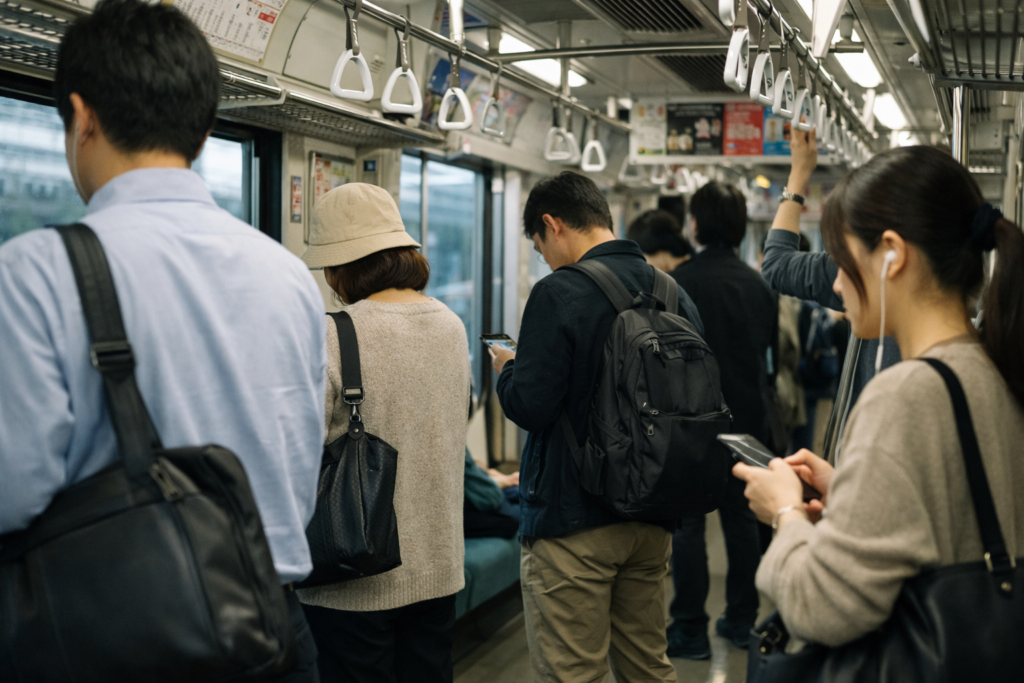
Phone calls inside trains are strongly discouraged. Smartphones should be set to silent mode, and audio from videos or music should never be audible to others. Even when using earphones, sound leakage is considered impolite.
Backpacks are usually worn on the front during crowded hours to avoid disturbing nearby passengers. Large luggage should be placed on overhead racks or kept compactly near your feet.
Priority Seats and Social Awareness
Priority seats are intended for elderly passengers, pregnant individuals, and people with disabilities. Even when these seats are unoccupied, travelers are expected to give them up immediately when needed.
Direct confrontation is rare in Japan. Instead of being corrected verbally, social expectations rely on awareness and self-regulation. Observing others often provides the best guidance.
Using Buses in Japan — Boarding, Payment, and Timing
How to Board and Pay
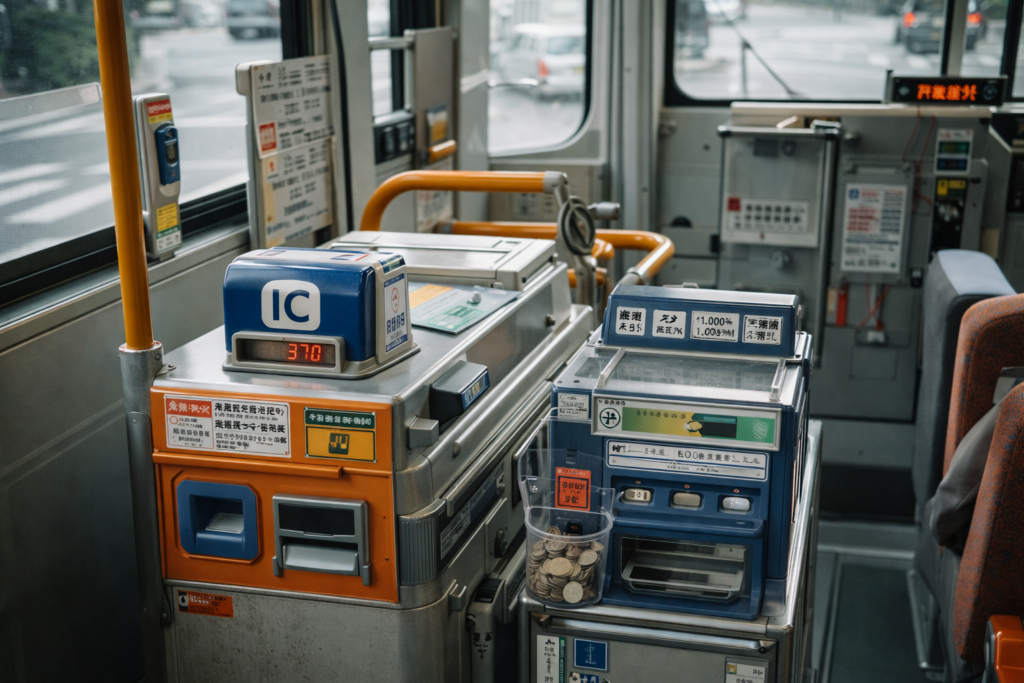
Most local buses operate on a rear-door boarding and front-door exit system. Payment is usually made when exiting. IC cards are widely accepted, but some buses do not provide change for cash payments.
If paying with cash, passengers should prepare exact change in advance using the onboard change machine. Delays during payment affect all passengers, so efficiency is appreciated.
Bus Behavior
Because buses are compact and often crowded, conversations should be kept minimal. Pressing the stop button once is sufficient; repeated pressing is unnecessary.
Shinkansen Etiquette — Comfort Through Quiet Coordination
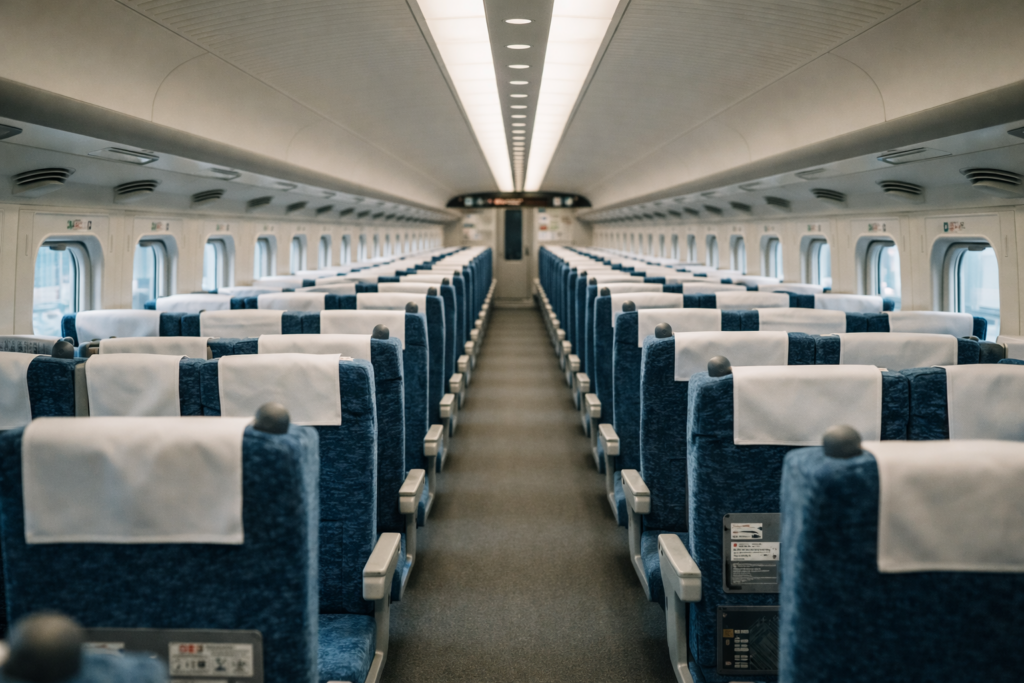
Seats and Luggage
Shinkansen trains have reserved and non-reserved seating. Passengers should sit only in their assigned seats. Large suitcases may require advance reservation or designated storage areas on certain routes.
Food, Drinks, and Conversation
Eating and drinking are allowed on Shinkansen trains. However, foods with strong odors are generally avoided out of consideration for others. Conversation is acceptable, but volume should remain low. Extended phone calls are discouraged.
Domestic Flights in Japan — Order Before and After Takeoff
Boarding and Deplaning
Passengers board according to announced groups. Cutting in line or boarding early without instruction is considered disruptive.
After landing, passengers typically remain seated until the rows ahead have exited. Standing up immediately is uncommon and unnecessary.
In-Flight Considerations
When reclining seats, a brief glance or small gesture toward the passenger behind is appreciated. Such subtle consideration reflects everyday Japanese courtesy.
Common Misunderstandings
Japanese transportation manners are often perceived as strict. In reality, perfection is not expected. Travelers who show awareness and willingness to adapt are rarely judged harshly.
Mistakes happen. What matters most is attentiveness rather than flawless execution.
Conclusion — Public Transportation as Cultural Experience
Japan’s public transportation system is more than infrastructure. It is a reflection of shared social values, mutual respect, and quiet cooperation.
By understanding the mindset behind the manners, travel becomes smoother and more meaningful. Moving through Japan’s cities then feels less like navigating rules and more like participating in everyday life.


Comments